
This is a guest newsletter contribution written by Laura Wilkes of Communicating for Impact.
When we think about creating videos to share our work, our minds tend to jump to the hurdles: complex software, expensive gear, and the hours lost editing. It can feel overwhelming, so we stay on the sidelines.
But impactful bite-sized videos (especially the ‘shorts’ that we want to post on social media) aren’t about high-end production. Just like great teaching, shorts centre on having clear goals, knowing your audience and tailoring your message to them.
Above all, short videos—much like a great lesson plan—are all about the ‘less is more’ approach.
If you want to create talking head videos (that are up to 3 minutes in length) that showcase your expertise and foster genuine connection while keeping things simple, you only need to focus on the following steps:
Step 1: Plan What You Want to Say
Keep your videos bite-sized by focusing on:
-
Who are you talking to? Zoom in on one person, not a crowd. Imagine a single student or client is sitting in the room across from you.
-
What is the single value? Serve one purpose. Ask yourself, ‘What do they gain by watching this video?’ (This doesn’t mean academic teaching—it can be a reflection, a shift in perspective, or a story).
-
What is the outcome? End with the next step. Whether it’s inviting them to follow for Part 2 or downloading a useful resource, focus on one action.
Step 2: Record with What You Have
Find a quiet space during a peaceful time of day. Position yourself within arm’s reach of your smartphone, with light (such as natural light from a window) facing you.
Most phones have a built-in grid feature. Turning this on makes it easier to frame your shot in a way that makes it feel like you’re in the room having a conversation with your audience.
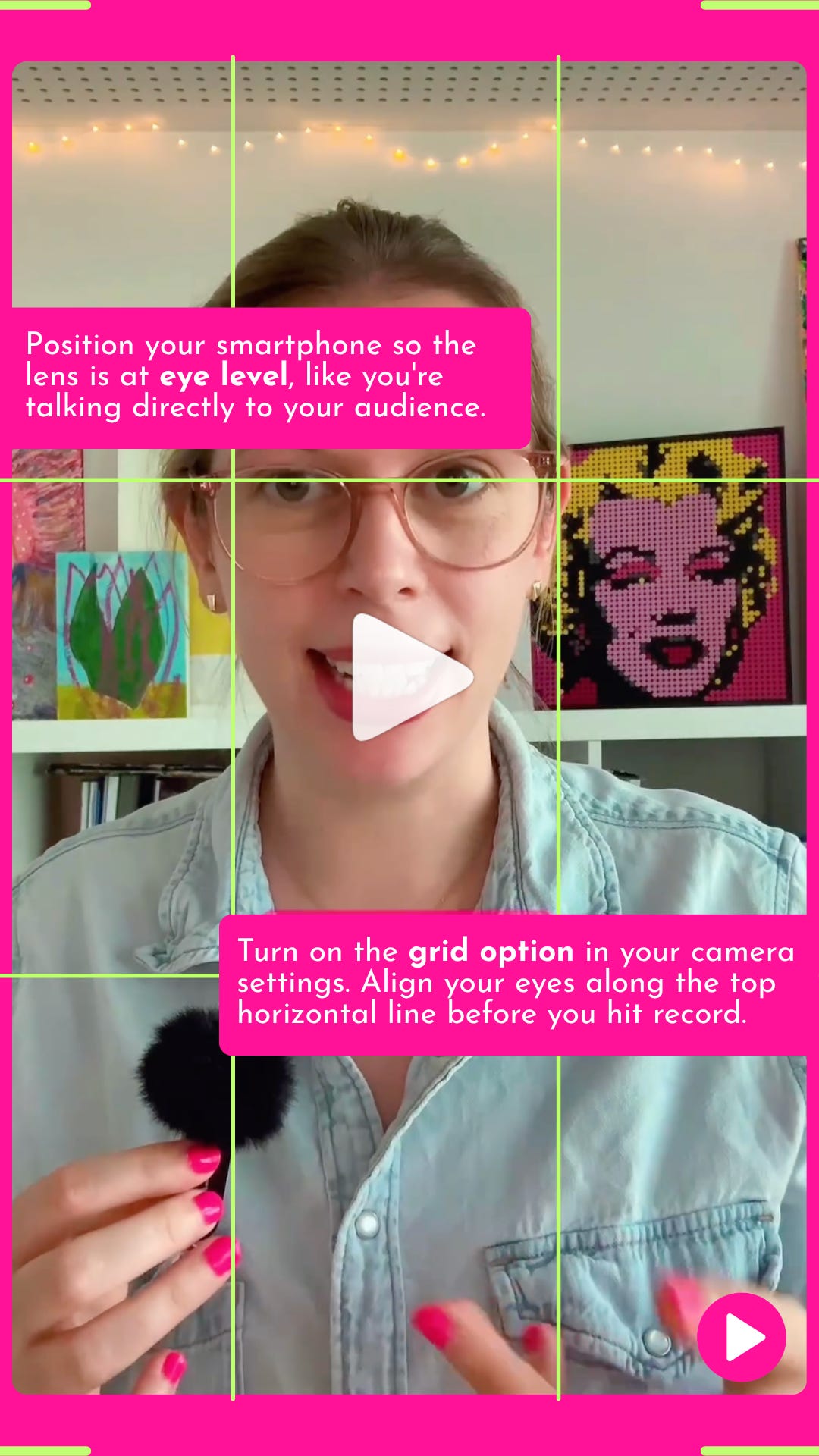
*the above is an image, not a video
If you have wired earbuds or earphones, plug them in—their microphones will capture clearer audio than the onboard microphone on your phone. It’s about making use of what you have to capture the best quality recording, as I demonstrate in this walkthrough here.
Step 3: Keep Editing to a Minimum
When we keep things simple, editing becomes much easier. This is what we teach in our beginner-friendly Video Venturer programme: how to create strategic short videos that make an impact, without eating into your week.
When it comes to editing, focus on removing long pauses and retakes, as well as adding automated captions for accessibility and to stop the scroll. This takes minutes when editing short videos, as I show in this mini tutorial using the Edits app.
Take on the Video Challenge
At the end of the day, we are using short videos to elevate our work, not to create a second job. You have incredible expertise and experience, so why not use video to share it?
A great place to start is with a (Re)Introduction Video. This is a ‘high-mileage’ video, meaning you can position it so it’s among the first things people see when they visit your social media profile and/or website.
Here is a simple framework to help you plan what to say:
-
The Headline: Open with a question or statement that speaks directly to your audience’s biggest needs, challenges, or fears.
-
The Intro: Briefly share who you are, what you do, and how you serve your audience.
-
The Next Step: Share where they can go to find out more or work with you.
Here’s my introduction video that I recorded back in 2024. While I’m due to record an update, I’m happy with how well this has served my goals up to now.
So, over to you
Have a go at recording your (re)introduction video, posting it online, and tagging me on social media, whether that’s Instagram, LinkedIn or YouTube. I will interact and comment on every video I see to cheer you on in using video to share your expertise with the world.
Happy recording!
Laura
About Laura
Laura Wilkes is the founder and producer at Communicating for Impact – a creative house for experts and educators based in Zurich, serving worldwide. To learn more about the programmes and services Laura and her team offer, visit Communicating for Impact.