What Is Teaching Listening?
Teaching listening means helping learners become better at understanding spoken language in real time.
This is different from simply playing an audio track and asking comprehension questions. That kind of lesson may tell us whether learners understood, but it does not always help learners understand why they struggled or what they can do differently next time.
A stronger approach to teaching listening helps learners:
- Understand the process of listening
- Cope with fast, messy, and reduced speech
- Recognize words in connected speech
- Use context and prediction without depending on them completely
- Build tolerance for uncertainty
- Listen more effectively to different voices, accents, and situations
- Move from classroom recordings toward real-world spoken English
The key idea is simple:
Listening should be trained, not just tested.
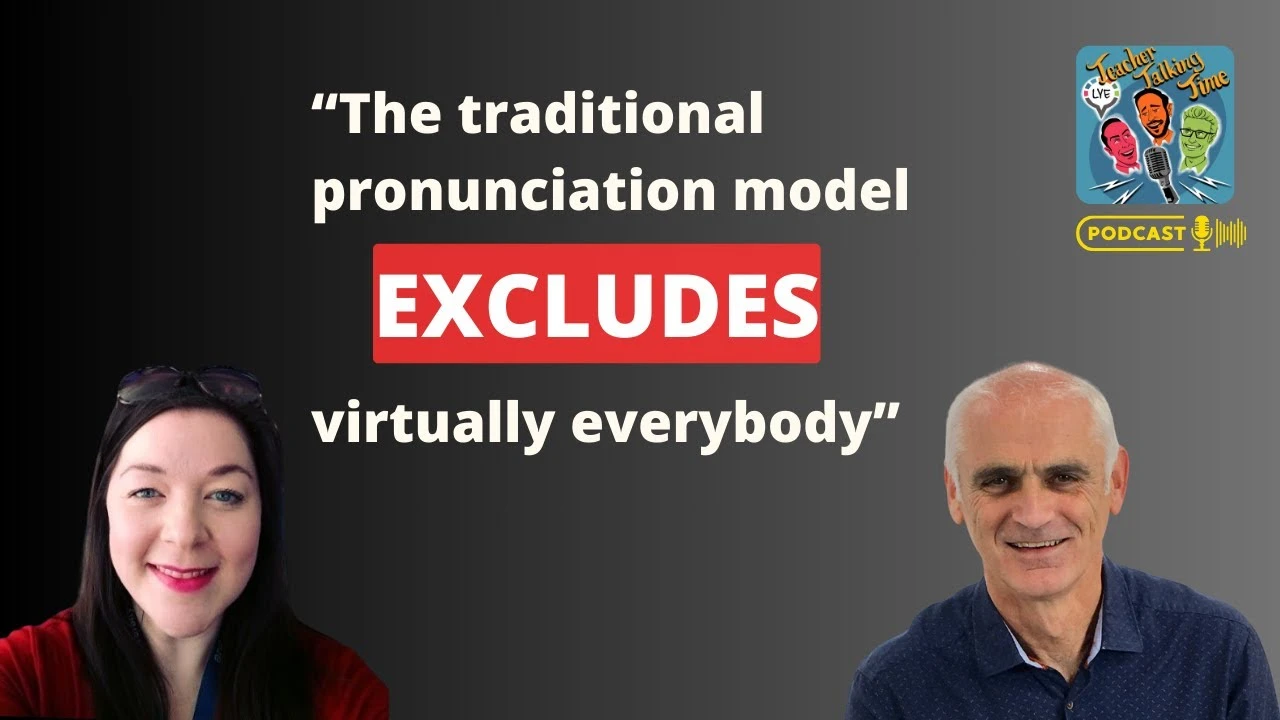
This page is based on three major influences in listening pedagogy: John Field, Richard Cauldwell, and Sheila Thorn.
John Field helps us understand listening as a process.
Richard Cauldwell helps us understand the stream of speech.
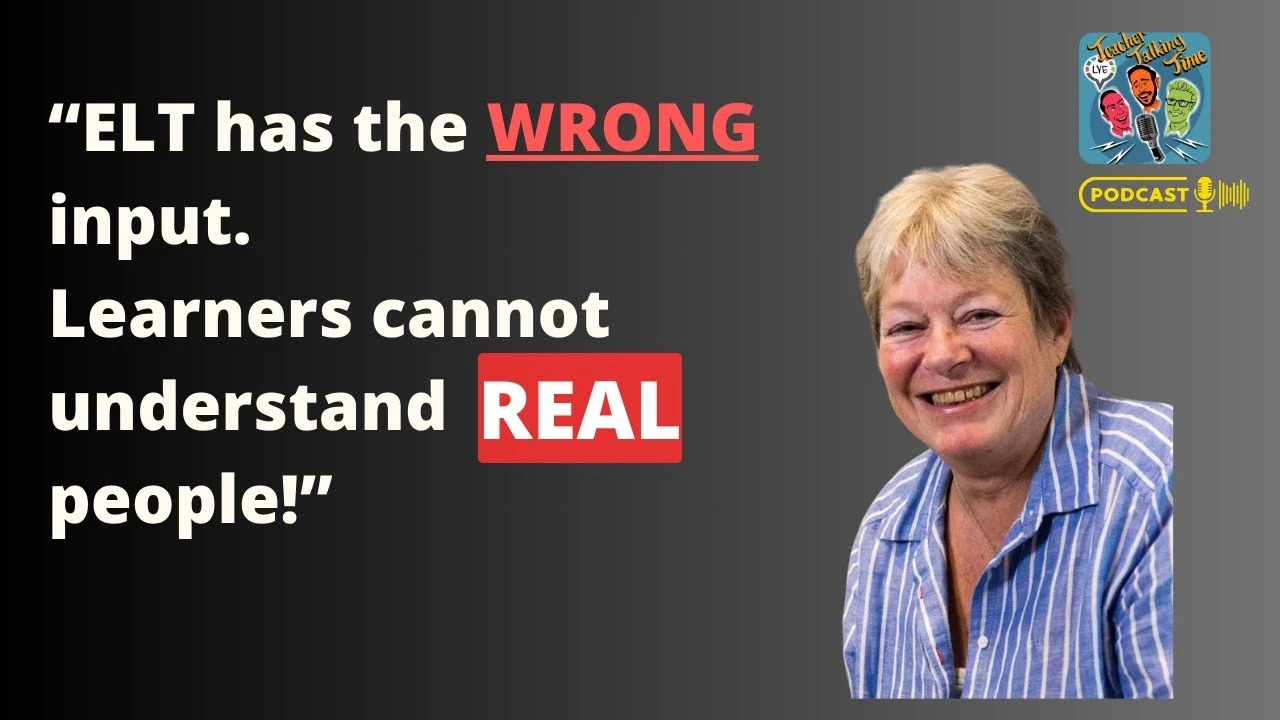
Sheila Thorn helps us understand the importance of authentic listening.
Together, their work gives teachers a practical way to design listening lessons that prepare learners for the real world.
Why Listening Needs to Be Taught Differently
Listening is often treated as a comprehension check.
The pattern is familiar:
- The teacher introduces a topic.
- Learners listen to an audio recording.
- Learners answer questions.
- The class checks answers.
- The lesson moves on.
The problem is that this often tests listening more than it teaches listening.
John Field argues that listening instruction has often focused too much on the product of listening, especially correct answers, and not enough on the process learners use to construct meaning from speech.
Richard Cauldwell adds another important problem: classroom listening often underestimates how messy normal speech is. Real speech is fast, squeezed, reduced, blended, and unpredictable. Learners may know a word when they see it written down, but fail to recognize it when it appears inside the stream of speech.
Sheila Thorn adds the classroom and materials perspective. Many coursebook recordings are scripted, graded, rehearsed, and recorded in studio conditions. But outside the classroom, learners meet spontaneous speech, different accents, hesitations, false starts, unfinished sentences, background noise, and speakers who do not simplify their language.
So the question is not only:
Did learners understand the recording?
The better question is:
Are we helping learners become better listeners beyond this recording?
The Field, Cauldwell, and Thorn Approach
1. John Field: Teach the process, not just the answer
John Field’s work challenges teachers to move beyond comprehension questions.
From this perspective, listening lessons should help learners understand what happens while they listen. Learners need support with decoding, word recognition, parsing meaning, using context, monitoring understanding, and recovering when comprehension breaks down.
This means teachers should ask questions like:
- Where did comprehension break down?
- Was the problem vocabulary, speed, pronunciation, grammar, memory, or context?
- Did learners mishear a word they already knew?
- Did they understand individual words but miss the overall meaning?
- Did they rely too much on prediction?
- What helped them repair understanding?
Field’s influence helps us design listening lessons that make the listening process visible.
2. Richard Cauldwell: Teach the stream of speech
Richard Cauldwell’s work reminds us that spoken English does not arrive as neat dictionary words.
In real speech, words are squeezed, weakened, linked, reduced, and reshaped. Cauldwell describes the need to help learners cope with the stream of speech, especially the gap between the clear forms learners expect and the messy forms they actually hear.
This is important because many listening problems are not vocabulary problems. They are decoding problems.
Learners may already “know” the words, but they cannot recognize them when spoken quickly or naturally.
A Cauldwell-inspired listening lesson helps learners notice:
- Weak forms
- ElisionAssimilation
- Linking
- Reduced syllables
- Fast speech
- Word clusters
- Blurred boundaries between words
- The difference between careful speech and spontaneous speech
Cauldwell’s influence helps us teach learners how spoken language actually sounds.
3. Sheila Thorn: Use authentic listening to train real-world listening
Sheila Thorn’s work emphasizes the importance of authentic listening.
Learners need exposure to real voices, real accents, real hesitation, real speed, and real communicative situations. Authentic listening does not mean throwing learners into impossible audio with no support. It means designing tasks that help learners train for the kind of speech they will meet outside the classroom.
A Thorn-inspired listening lesson uses authentic speech carefully and purposefully.
This might include:
- Short extracts from real conversations
- Interviews with natural speech
- Different accents and varieties of English
- Real-life stories
- Spontaneous spoken explanations
- Recordings with hesitation, repetition, and reformulation
- Tasks that train learners to listen more effectively
Thorn’s influence helps us prepare learners for English as it is actually spoken.
What Makes Real Listening Difficult?
Listening is difficult because learners have to process spoken language while it is happening.
They cannot hold the whole message in front of them. They cannot see word boundaries. They cannot always predict what the speaker will say. They often need to understand enough while also preparing to respond.
Here are some of the main challenges.
1. The speech stream
Learners often expect spoken English to sound like written English read aloud. But everyday speech is more fluid, reduced, and compressed.
For example, learners may recognize a phrase clearly when it is written, but not when it appears in fast speech.
2. Decoding
Decoding means turning the sounds learners hear into words and phrases they can recognize.
If learners cannot decode the stream of speech, they may not reach meaning, even if they know the vocabulary.
3. Speed
Learners often say, “They speak too fast.”
Sometimes the problem is speed. But often the deeper problem is that learners are not used to how words change in connected speech.
4. Accent and variation
Learners may understand one speaker but struggle with another. This can happen because of accent, rhythm, pronunciation, intonation, or variety of English.
5. Authentic speech features
Real speech includes hesitation, repetition, false starts, incomplete sentences, overlapping speech, informal language, and reformulation.
These are not mistakes. They are normal features of spoken communication.
6. Anxiety and uncertainty
When learners think they must understand every word, they can panic as soon as they miss something.
Good listeners do not understand everything. They recover, infer, continue listening, and focus on what matters.
How Listening Lessons Work
A stronger listening lesson trains learners before, during, and after listening.
1. Before listening
The teacher prepares learners for the situation and listening purpose.
This might include:
- Introducing the context
- Clarifying who is speaking and why
- Activating background knowledge
- Setting a clear listening goal
- Preparing learners for accent, speed, or genre
- Pre-teaching only essential vocabulary
- Helping learners predict possible content
The goal is not to explain everything before listening. The goal is to make the first listening possible.
2. During listening
Learners listen with a clear purpose.
This might include:
- Listening for the main idea
- Identifying the speaker’s purpose
- Recognizing the problem
- Choosing between options
- Following the stages of a conversation
- Listening for specific information
- Checking predictions
- Comparing what they heard with a partner
Each listening should have a reason.
3. After listening
The teacher helps learners understand what happened during listening.
This might include:
- Checking answers
- Discussing where comprehension broke down
- Using a transcript
- Listening again to short extracts
- Noticing connected speech
- Identifying reduced forms
- Comparing expected words with actual pronunciation
- Practicing difficult word clusters
- Reflecting on listening strategies
The goal is not only to finish the activity. The goal is to help learners become better listeners.
Practice Teaching Listening
Here is a practical process teachers can use.
Step 1: Choose a real listening text
Use a short audio or video text that gives learners a reason to listen.
Examples:
A short interview
A podcast clip
A workplace conversation
A story
A real-life explanation
A customer service exchange
A classroom discussion
A short lecture extract
A video clip
Short is often better. A short extract allows learners to listen more deeply.
Step 2: Give learners a meaningful purpose
Do not start with random comprehension questions.
Give learners a task that reflects why someone would listen in real life.
Examples:
Identify the speaker’s problem
Choose the best solution
Summarize the main point
Decide what advice to give
Compare two opinions
Find out what happened
Prepare a response
Notice how the speaker explains an idea
Step 3: Start with meaning
Begin with global understanding.
Ask:
- What is the situation?
- Who is speaking?
- What is the main idea?
- What problem are they discussing?
- What does the listener need to understand?
This helps learners stay focused on communication.
Step 4: Diagnose the breakdown
After the first listen, ask where the difficulty happened.
Was it:
- A word they did not know?
- A word they knew but did not recognize?
- A fast phrase?
- An accent feature?
- A reduced form?
- A missing context clue?
- A memory problem?
- A distraction caused by one unknown word?
This is where listening becomes teachable.
Step 5: Zoom in on the speech stream
Choose a short section of the recording and help learners hear it more clearly.
You can ask learners to:
- Listen and mark word boundaries
- Compare what they expected with what they heard
- Use a transcript after listening
- Notice weak forms
- Identify missing or reduced sounds
- Repeat difficult chunks
- Listen again at normal speed
- Practice hearing the phrase inside the larger text
This stage is strongly influenced by Cauldwell’s work on the stream of speech.
Step 6: Return to the whole text
After zooming in, let learners listen again.
The goal is to help them reconnect the details to the whole message.
Step 7: Connect listening to communication
Learners should do something with what they heard.
Examples:
- Discuss the speaker’s ideas
- Respond to the situation
- Role-play a similar conversation
- Give advice
- Make a decision
- Summarize the story
- Compare with their own experience
- Prepare follow-up questions
Listening should lead back to communication.
Common Misunderstandings About Listening
“Listening means playing an audio and asking questions.”
That is not enough. Comprehension questions may check understanding, but they do not necessarily teach learners how to listen better.
“Authentic listening is too difficult for learners.”
Authentic listening can be difficult, but it can be made teachable. Teachers can use shorter extracts, clearer tasks, repeated listening, transcripts, and focused support.
“Learners need to understand every word.”
No. Real listening involves partial understanding, inference, recovery, and tolerance for uncertainty.
“The main problem is always vocabulary.”
Sometimes vocabulary is the problem. But often learners know the words and still cannot recognize them in fast or connected speech.
“Pronunciation and listening are separate.”
They are deeply connected. If learners are not familiar with how words change in connected speech, they may struggle to understand language they already know.
“Scripted recordings are enough preparation for real life.”
Scripted recordings can be useful, especially at early stages. But learners also need supported exposure to spontaneous speech if they are going to understand real people outside the classroom.
Learn the Research Behind Listening
This page is grounded in three major ideas from listening pedagogy.
1. Listening as process
John Field argues that listening teaching should pay closer attention to the mental processes involved in understanding speech. This includes decoding the sound signal, recognizing words, using context, and constructing meaning.
For teachers, this means we need to do more than mark answers right or wrong. We need to help learners understand how listening works.
2. Listening as decoding the stream of speech
Richard Cauldwell emphasizes that learners need help with the sound substance of speech. Real speech is not neat, slow, or fully articulated. It is often messy, fast, reduced, and reshaped.
For teachers, this means listening lessons should include work on the speech stream, especially short stretches of authentic or natural speech.
3. Listening as preparation for real-world speech
Sheila Thorn argues for the importance of authentic listening materials and real-world listening practice. Learners need to hear spontaneous speech, different accents, and natural spoken language if they are going to cope outside the classroom.
For teachers, this means authentic listening should not be an occasional extra. It should be part of how we train learners to understand real English.