
This is a guest newsletter contribution written by Jake Young of Fluentize.
When I first started teaching English in Prague almost 15 years ago, it was both exciting and hectic.
I had built my own private practice teaching conversation classes to Czech students, and at one point I was teaching more than 20 students every week.
Managing that many students meant juggling a lot of responsibilities, but the biggest— and arguably the most important — was lesson planning and preparing materials.
I always tried to make every lesson engaging and effective. That’s the goal, right? As teachers, we want to make an impact, give our students a positive learning experience, and feel like we’ve made a difference. Materials are one of the main tools we use to do that.
Eventually, I started creating my own lessons. I wanted materials that reflected my students’ interests and encouraged them to speak more about topics they actually cared about.
Over time, one format consistently stood out with every lesson and student I taught: video.
Why Video Worked Better Than Other Materials
Many teachers use news articles, audio clips, and textbook exercises in their lessons. These resources can be very effective.
But in my experience, video brings something different. Students tend to pay closer attention and respond more emotionally. Most importantly, videos naturally lead to engaging and meaningful discussions.
Authentic videos capture things written text simply can’t: accents, gestures, rhythm, visuals, real human interaction, and natural speech. Students see body language and observe how people react in real situations.
For learners, this makes the language come alive. For teachers, it provides a powerful starting point for discussion and a solid foundation to build a lesson around.
With nearly all of my students, one pattern was clear: engagement increased whenever a lesson included video—whether it was a news report, a short comedy sketch, or a travel video.
The Hidden Problem with Authentic Materials
One issue teachers run into using that making a well-structured lesson is not easy. Teachers often need to:
-
design pre-viewing tasks
-
anticipate challenges
-
build comprehension activities
-
create speaking tasks
-
structure a logical lesson flow
By the time everything is finished, a single lesson can require hours of preparation.
Many teachers love the idea of using authentic materials, but realistically they cannot spend that much time preparing lessons every day.
The Experiment That Became Fluentize
Over time, I began turning more and more videos into full lessons for my students.
Some of the earliest lessons were created for my students Martin and Tomas, pictured below. They always responded positively to the video-based lessons and often asked to do more. Here they are showing a few of them.
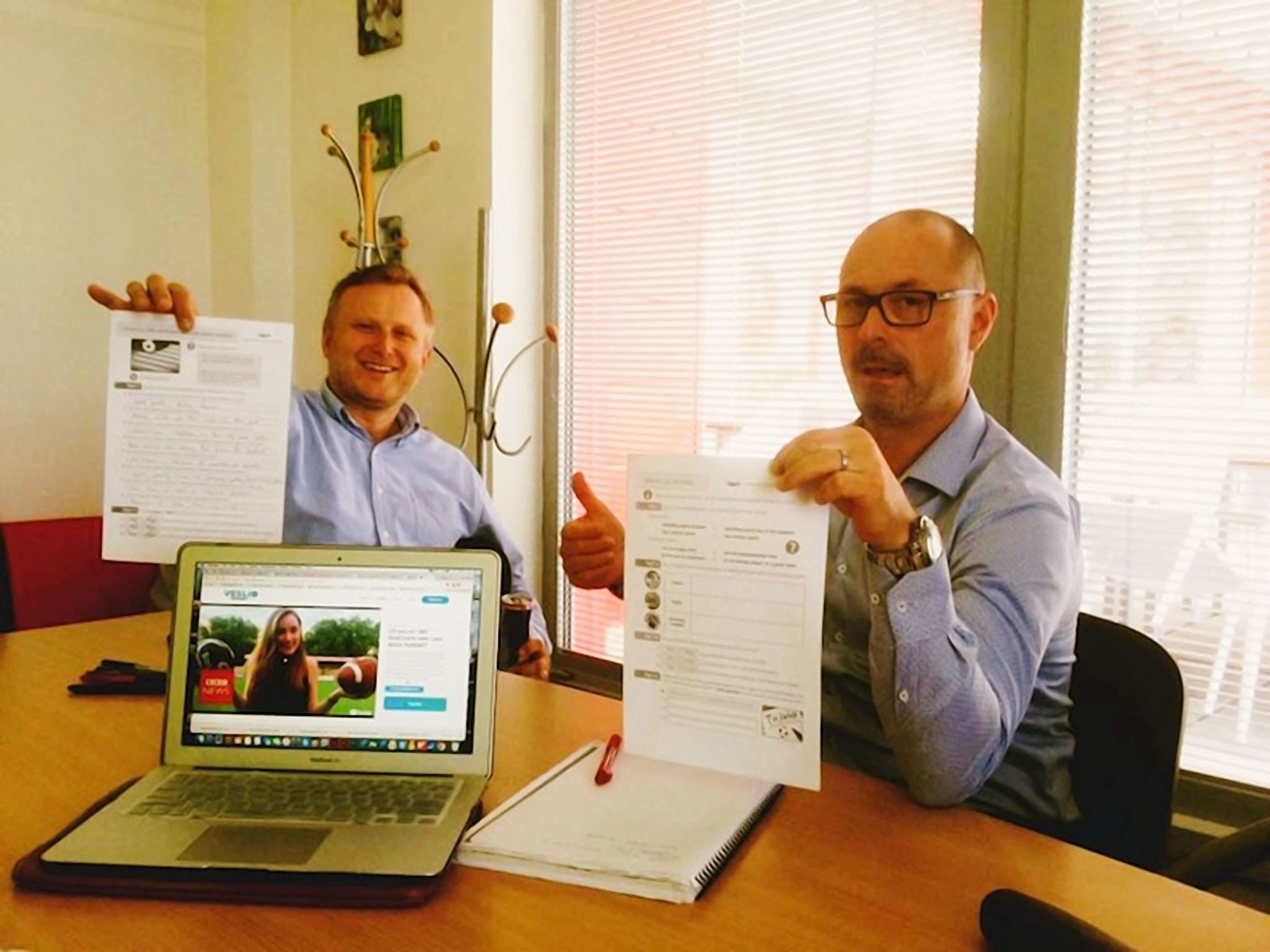
So I started creating lessons based on short YouTube videos for most of my students.
Eventually I started sharing these lessons with other teachers in Prague. That’s when the idea for Fluentize began to take shape.
Originally, I had just a small website where I published a few dozen video-based lessons I had written for my own classes.
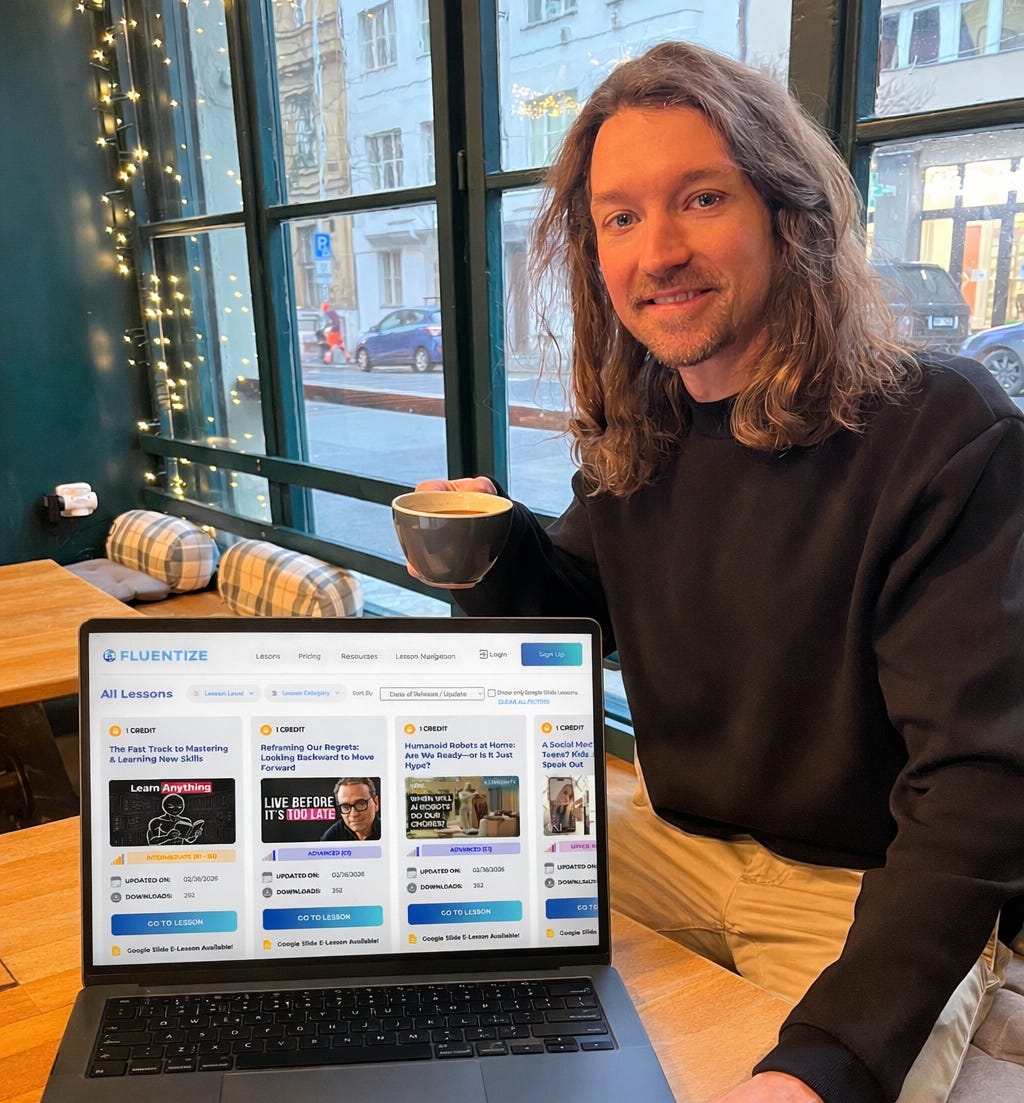
Today, the platform has grown into a library of more than 650 interactive ESL lessons used by thousands of teachers around the world. But the idea behind it remains simple.
What is Fluentize?
Want to teach your best lessons — without all the prep?
Fluentize turns real-world videos into interactive ESL lessons for teens and adults. Explore 650+ ready-to-teach lessons designed to engage your students, simplify lesson planning, and save you hours of preparation.
Get 25% off annual Fluentize plans with the code “TTT25”
Helping Teachers Focus on Teaching
One thing I learned early on is that lesson planning and teaching are actually two different skills.
Many teachers are fantastic when it comes to teaching but struggle with the investment required to design strong materials from scratch. It requires a lot of creativity, resources, and mental bandwidth.
Fluentize was built to help solve that problem.
By transforming real-world videos into ready-to-teach ESL lessons, the goal is simple: help teachers bring authentic content to students without having to build lessons from scratch.
Bringing the Real World Into the Classroom
At the end of the day, language learning works best when students feel connected to what they are learning.
Authentic video helps create that connection.
When students watch real conversations, hear natural language, and discuss real-world topics, the lessons become much more effective and meaningful.
Bringing video to your lesson is bringing the outside world live to your lesson.
If you’d like to explore how authentic video can work in your classroom, you can check out Fluentize’s free lessons here.